The Future of Commuting: What to Expect from Autonomous Vehicles by 2030
The daily commute has long been a source of stress, wasted time, and economic inefficiency for millions of people around the world. Spending hours trapped behind the steering wheel in heavy traffic drains personal energy and lowers daily productivity. However, the dawn of autonomous vehicles promises to rewrite the rules of personal mobility by the end of this decade. Self-driving technology has transitioned rapidly from science fiction experiment to real-world deployment on public roads. As artificial intelligence, advanced sensor suites, and high-speed connected networks mature, the landscape of urban and suburban transportation is preparing for a radical overhaul. Anticipating what these changes mean helps commuters, city planners, and businesses adapt to a fully integrated autonomous transport ecosystem.
The Technological Leap to Mainstream Autonomy
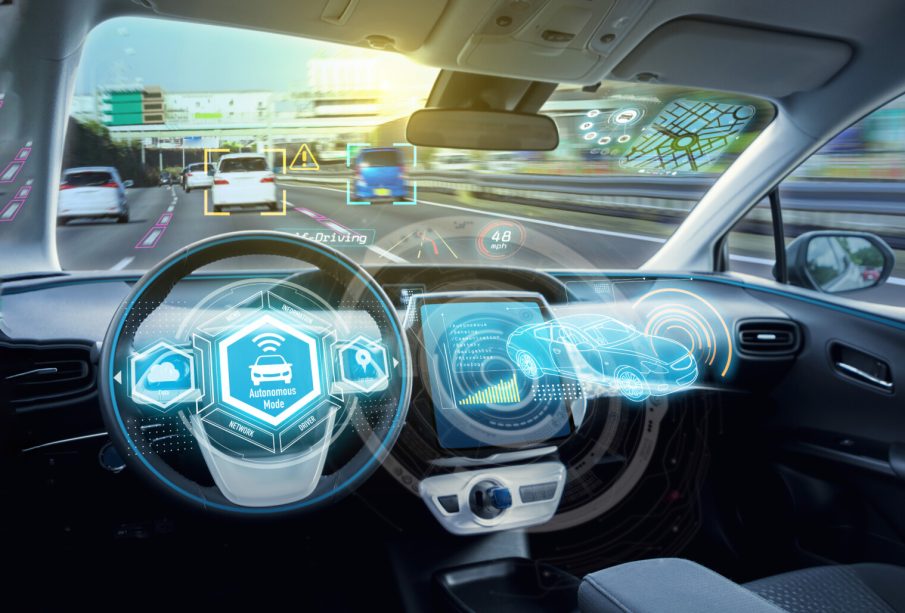
Achieving reliable self-driving capability requires a complex integration of hardware and software working in tandem to replicate or exceed human perception.
-
Advanced Sensor Fusion: Modern autonomous vehicles rely on a combination of light detection and ranging lasers, radar arrays, high-resolution optical cameras, and ultrasonic sensors to map the surrounding environment in real time.
-
Artificial Intelligence Decision Engines: Powerful on-board computing platforms process billions of data points every second, using deep learning algorithms to predict pedestrian movements, anticipate erratic drivers, and navigate complex intersections safely.
-
Vehicle-to-Everything Communication: Integrating 5G networks allows self-driving cars to communicate instantaneously with traffic signals, roadside infrastructure, and other connected vehicles to optimize traffic flow and prevent collisions.
Transforming the Daily Commuter Experience
The shift from active driving to passive riding fundamentally changes how individuals utilize their time while traveling to and from their workplaces.
-
Reclaiming Productivity Hours: Instead of staring angrily at bumper-to-bumper traffic, commuters can catch up on emails, participate in virtual meetings, read books, or simply relax during their journey.
-
Eliminating Driver Fatigue: Long-distance commuters who traditionally arrived at the office exhausted from navigating heavy traffic will benefit from arriving fresh and focused after a stress-free ride.
-
Enhanced Mobility for Underserved Populations: Fully autonomous vehicles provide independent travel options for senior citizens, individuals with visual impairments, and teenagers who cannot drive traditional vehicles.
The Rise of Shared Mobility and Robo-Taxi Fleets
By 2030, personal vehicle ownership models will face intense competition from on-demand, app-based autonomous transportation networks that promise cheaper and more convenient travel.
-
On-Demand Robotaxi Services: Major metropolitan areas will see massive fleets of driverless taxis providing point-to-point transportation without the need to hail human drivers or worry about parking.
-
Declining Parking Infrastructure Demands: Because shared autonomous vehicles drop off passengers and immediately move to service the next fare, cities will require significantly fewer downtown parking lots and multi-story garages.
-
Lower Cost per Mile: Eliminating the labor costs associated with human drivers will drive down the per-mile cost of shared rides, making on-demand transit accessible to a broader demographic of commuters.
Overcoming Regulatory and Public Safety Hurdles
Despite incredible technological milestones, widespread adoption requires overcoming significant legal, ethical, and psychological barriers before 2030.
-
Complex Liability and Insurance Frameworks: Establishing who bears legal responsibility in the rare event of a software-related accident remains a major challenge for lawmakers and insurance companies.
-
Building Consumer Trust: Overcoming public skepticism regarding machine safety requires transparent safety data, rigorous testing standards, and gradual exposure on public roadways.
-
Weather and Edge Case Navigation: Software engineers continue to refine algorithms to handle severe weather events, heavy snowfall, unmapped rural roads, and sudden construction zone detours safely.
Frequently Asked Questions
Will traditional human-driven cars be completely banned by 2030?
Traditional human-driven vehicles will not be banned by 2030. While autonomous vehicles will see massive expansion in major metropolitan areas and designated commercial lanes, human-driven cars will continue operating on public roads for many years.
How do autonomous vehicles handle sudden emergencies like ambulance sirens?
Self-driving cars use high-frequency directional microphones and specialized camera algorithms to detect emergency vehicle sirens and flashing lights, allowing them to pull over safely and yield the right of way.
What happens if an autonomous vehicle loses internet connectivity mid-trip?
Autonomous vehicles do not rely entirely on cloud connectivity to drive. Their critical perception, navigation, and emergency braking systems operate on powerful local on-board computers that function independently of external networks.
Will autonomous commuting increase or decrease city traffic congestion?
While efficient routing and platooning can smooth traffic flow, the convenience of empty cruising vehicles and increased mobility access could initially cause localized congestion spikes unless cities implement smart congestion pricing.
How do self-driving cars keep passengers secure from cyber threats?
Automated vehicle manufacturers utilize military-grade encryption, secure boot protocols, isolated internal networks, and real-time intrusion detection systems to protect vehicle software from malicious hacking attempts.
What is the difference between a Level 3 and a Level 4 autonomous vehicle?
A Level 3 vehicle can drive itself under specific conditions but requires a human driver to take over when requested, whereas a Level 4 vehicle operates entirely on its own without requiring human intervention within designated operational zones.
How will autonomous vehicles impact public mass transit systems?
Autonomous shuttles and micro-transit pods will likely serve as first-mile and last-mile feeders for traditional subway and train networks, making public mass transit more accessible and efficient for suburban commuters.