How to Eliminate Hard-to-Remove Pet Odors from Carpets
Sharing your home with a beloved pet brings immeasurable joy, but it can also introduce stubborn household challenges. Among the most frustrating issues pet owners face is the lingering, deep-seated odor of pet urine trapped inside carpet fibers and underlying padding. Once an animal has an accident in the same spot multiple times, uric acid crystals form as the urine dries. These microscopic crystals bond tightly to carpet fibers and can remain dormant for months, reactivating and releasing a pungent ammonia smell every time humidity levels rise in your home.
Standard household vacuuming and masking agents like air fresheners or scented candles only cover up the problem temporarily without solving the root cause. To permanently eliminate deep pet odors, you need a targeted chemical and mechanical approach that breaks down the uric acid crystals at a molecular level. By utilizing specific enzymatic reactions, proper extraction techniques, and deep-cleaning steps, you can restore your carpets to a fresh, clean state without having to rip them out.
Step One: Locate Hidden Accidents with a UV Blacklight
Before you can treat a persistent pet odor, you must find every single affected area. Pets often return to the exact same spot because residual scent molecules remain trapped deep within the carpet backing, even if the surface looks and smells clean to human noses.
-
Turn Off All Room Lights: Darken the room completely by closing curtains and turning off overhead lights so that any fluorescence stands out clearly against the carpet texture.
-
Scan the Floor Systematically: Slowly sweep a handheld ultraviolet blacklight across your flooring. Dried pet urine stains will glow with a distinct yellow or neon green color under UV light, allowing you to map out every target zone before applying any cleaning solutions.
Step Two: Blot and Extract Fresh or Damp Accidents
If you catch a pet accident while it is still wet or damp, immediate action can prevent the liquid from soaking past the primary carpet backing and into the subfloor or wooden baseboards below.
-
Blot Never Rub: Take a thick stack of clean white paper towels or a microfiber cloth and press down firmly on the wet spot. Never scrub or rub the area, as friction pushes the liquid deeper into the carpet tufts and frays the delicate fibers.
-
Apply Downward Pressure: Stand on the towels for a few seconds to absorb as much moisture as humanly possible. Repeat this process with fresh dry towels until pressing down no longer transfers moisture to the fabric.
Step Three: Use Enzymatic Cleaners for Deep Crystal Breakdown
Traditional soap and water will not eliminate pet urine odors because they cannot dissolve uric acid crystals. This is where specialized bio-enzymatic cleaners become essential for successful odor removal.
-
How Enzymes Work: Enzymatic formulas contain safe, specialized bacteria and active enzymes that consume organic waste, breaking down the uric acid molecules into harmless gases that evaporate completely.
-
Saturate the Affected Area: Pour or spray the enzymatic solution generously over the stained spot, making sure it penetrates deep enough to reach the carpet backing and the foam padding underneath where the odor originates.
-
Allow Adequate Dwell Time: Cover the treated spot with a damp towel to slow down evaporation and let the product sit undisturbed for at least fifteen to twenty minutes, or according to the specific manufacturer instructions on the bottle.
Step Four: Rinse and Extract Moisture Thoroughly
Leaving cleaning residue or liquid trapped inside your carpet pad invites mold growth and can actually attract fresh dirt over time, creating a sticky patch that draws in more debris.
-
Extract with a Wet Vacuum: Use a wet-dry vacuum or a dedicated home carpet extractor to pull out all the moisture, dissolved waste, and residual cleaner from the deep layers of the carpet.
-
Press with Weighted Towels: If you do not own a carpet extractor, lay down clean white towels over the damp patch and place a heavy flat object like a heavy book or pot on top for an hour to wick out remaining liquid.
Step Five: Neutralize Residual Odors with Baking Soda
For mild residual smells or as a final deodorizing step after an enzymatic treatment has dried completely, simple household baking soda works wonders as a natural odor neutralizer.
-
Generous Application: Sprinkle a heavy, even layer of baking soda directly across the dry carpet surface where the odor was previously detected.
-
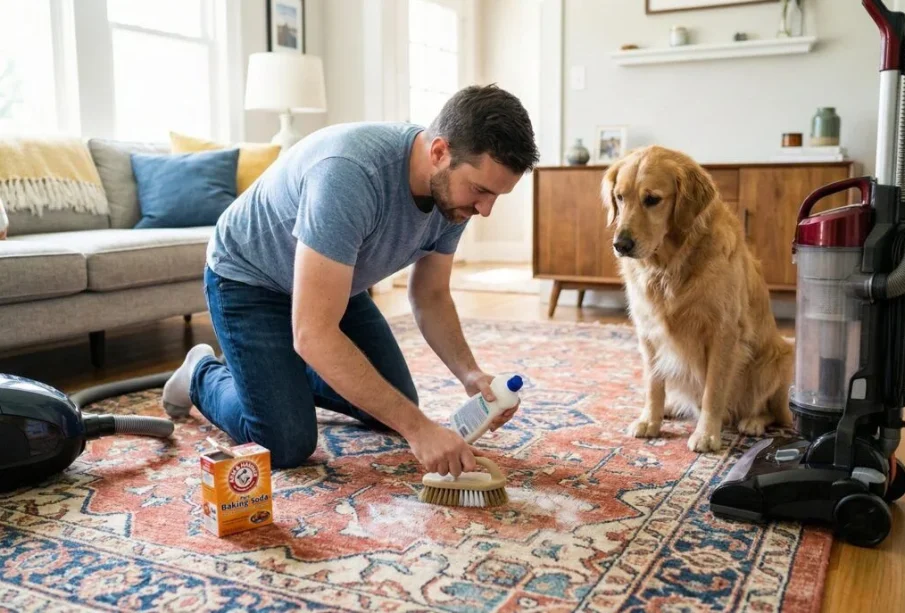
Brush into Fibers: Use a soft-bristled brush to gently work the baking soda powder down into the middle of the carpet fibers so it can make direct contact with any remaining odor molecules.
-
Vacuum Thoroughly: Let the baking soda sit undisturbed overnight to absorb lingering scents, then use a high-powered vacuum cleaner the next morning to lift all the powder away.
Frequently Asked Questions
Can steam cleaning remove old pet urine odors from carpets?
Using a traditional hot water extractor or steam cleaner without a pre-treatment can actually bake the urine proteins and uric acid crystals permanently into the carpet fibers, making the odor much worse. You must always break down the uric acid with an enzymatic cleaner before applying heat or steam.
What should I do if the pet odor is coming from the subfloor beneath the carpet?
If urine has soaked past the carpet and padding into a wooden subfloor, cleaning the surface carpet will not solve the issue. You will need to pull back the carpet, treat the wooden subfloor with a specialized sealing primer designed to block odors, and replace the contaminated section of carpet padding entirely.
Are vinegar and baking soda effective against cat urine?
While white vinegar helps neutralize the alkalinity of fresh urine, it is rarely strong enough to dissolve stubborn, aged uric acid crystals from cats. Cat urine has a particularly pungent chemical makeup, meaning commercial enzymatic cleaners designed specifically for feline waste yield much better long-term results.
How long do enzymatic cleaners need to stay wet to work effectively?
Enzymes require moisture to remain active and break down organic matter. If a sprayed enzymatic cleaner dries out within two minutes in a hot room, the chemical reaction stops prematurely. Covering the area with plastic wrap or a damp towel helps keep the solution wet longer so the enzymes can complete their job.
Can essential oils mask pet odors safely in a carpeted room?
Essential oils only mask bad smells temporarily and do not remove the underlying chemical compounds causing the odor. Furthermore, certain popular essential oils like tea tree, citrus, and eucalyptus are toxic to cats and dogs if they ingest or absorb them through their paws, making them risky to use around pets.
Why does a treated carpet smell stronger on humid or rainy days?
Uric acid crystals are hygroscopic, meaning they naturally absorb moisture from the air. When indoor humidity rises, these dormant crystals swell up with moisture and release trapped ammonia gases into the air, causing old stains to suddenly smell fresh again even if they have been dry for months.
How can I prevent pets from repeatedly soiling the same carpeted spot?
Pets are driven by scent to return to previous accident locations. Once you have thoroughly cleaned the area with an enzymatic cleaner and the spot is completely dry, block access to the area temporarily or place furniture over the zone so your pet cannot recognize their previous marker scent.